Factory air conditioning cleaning is more than rinsing a coil. It is a maintenance activity that must consider technician safety, air quality, production conditions and business continuity. Dust, process residues, operating hours and equipment designs differ across facilities. Cleaning methods and inspection intervals should therefore follow equipment instructions and the results of a site assessment, with work carried out by qualified and authorized personnel.
1. Assess the HVAC system before cleaning
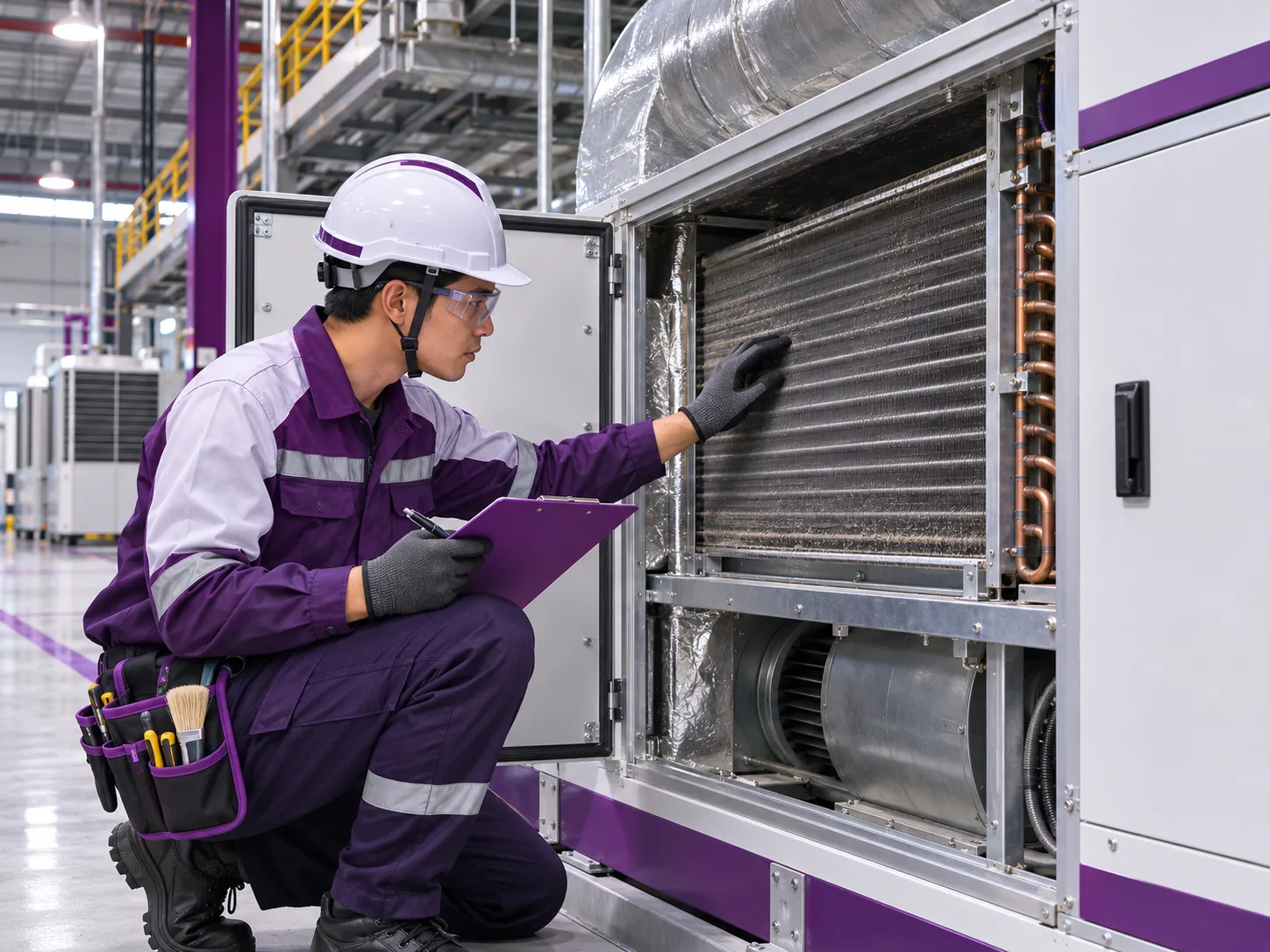
Identify the equipment types and quantities, including split systems, packaged units and air handling units (AHUs). Record unit IDs, locations, operating hours, dust or oil exposure and production-area constraints. Note weak airflow, water leaks, odors and inadequate cooling. Where safe, have technicians capture baseline readings before shutdown. Coordinate maintenance windows and contingency cooling with production teams.
2. Prepare the site and control hazards
Before opening equipment or removing components, assess hazards, follow site permit requirements, isolate hazardous energy under the facility lockout/tagout (LOTO) procedure and verify safe isolation. Switching off a remote control is not sufficient. Apply fall protection where required, restrict access and protect products, machinery and electrical panels from dust, water and chemicals. Select personal protective equipment according to risks and chemical safety data sheets.
3. Inspect and maintain air filters
Dust-loaded filters can increase airflow resistance. Check filter type and condition first. Clean washable filters using the manufacturer’s method and allow them to dry before installation. Replace disposable filters at their specified limits rather than washing them. Where differential-pressure monitoring is available, use readings and manufacturer limits to guide maintenance. Contain removed dust to avoid contaminating production areas.
4. Clean evaporator and condenser coils appropriately
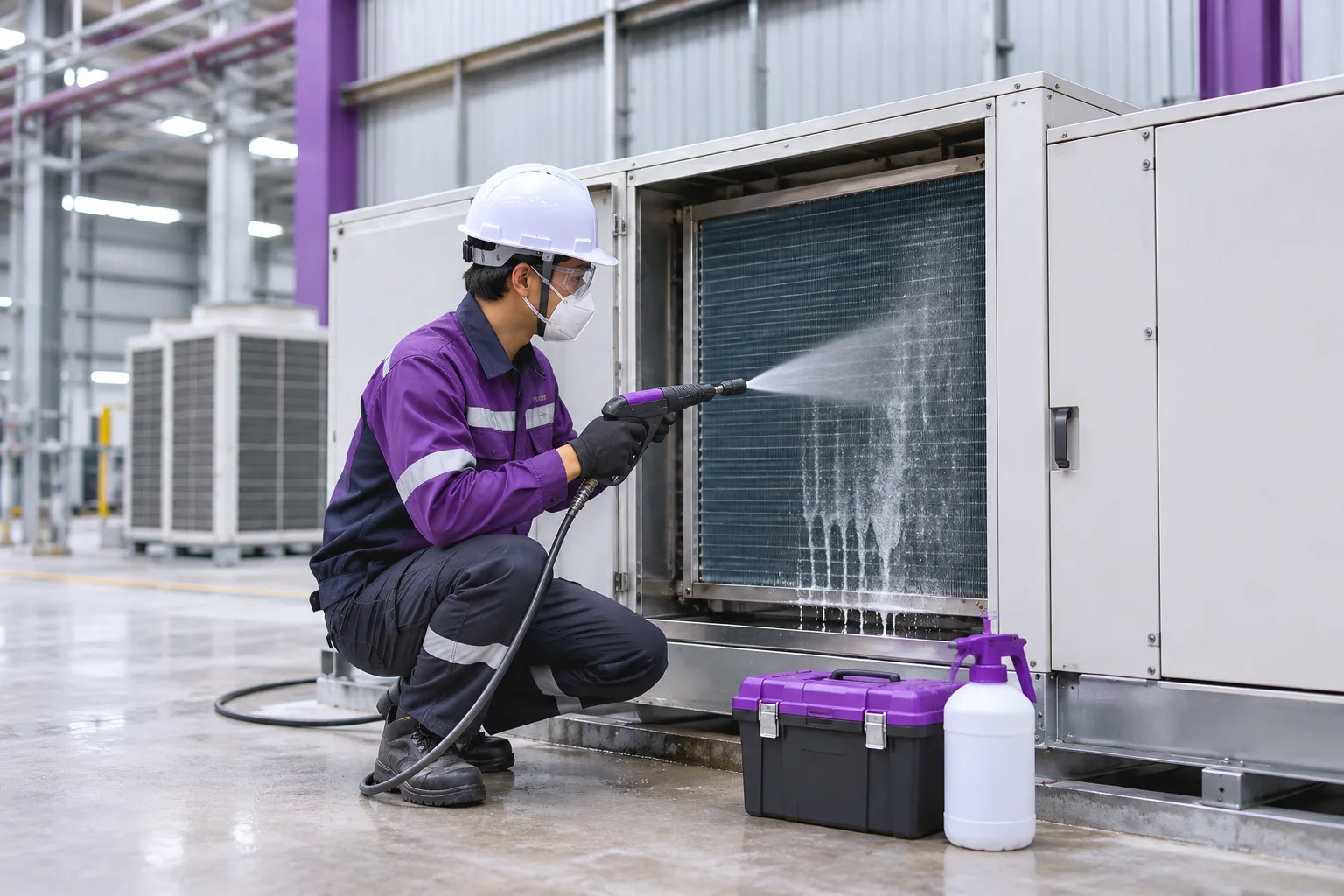
Have a technician inspect deposits and fin condition before selecting cleaning tools, water pressure and chemicals. Use only methods compatible with the coil construction and coatings. Avoid excessive pressure that could deform fins, unapproved chemicals and water ingress into electrical components. Some coils have specific chemical and pressure restrictions. Collect and dispose of contaminated wastewater according to site requirements.
5. Check fans, drain pans and condensate lines
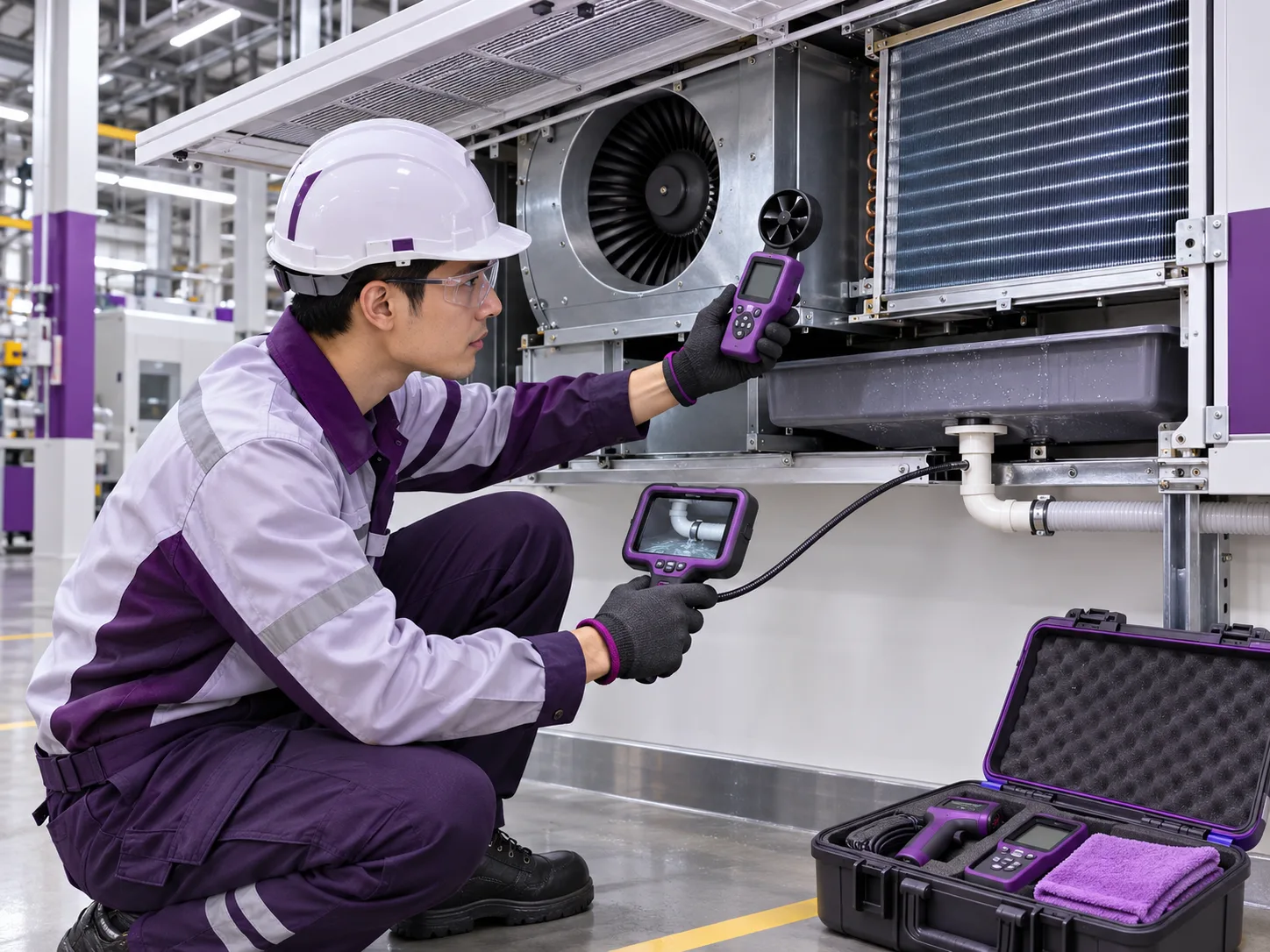
Inspect accessible fans, blowers and airflow paths because accumulated debris can restrict airflow or contribute to vibration. Check condensate pans, drains and pumps where fitted. After cleaning, verify drainage and leaks according to equipment instructions. Ductwork, controls and refrigerant circuits may require separate specialist work and should not automatically be assumed to be included in routine cleaning.
6. Test the system and document acceptance
Before restoring power, confirm that components are correctly assembled, electrical areas are suitably dry, guards are in place, tools are removed and people are clear. Restore energy only through the authorized procedure. Check inlet and outlet air temperatures, airflow, noise, vibration and drainage as appropriate. Qualified personnel may record electrical current and other supported operating data. Compare pre- and post-service readings under comparable conditions; do not promise a fixed energy-saving percentage without adequate measurement.
7. Establish a preventive maintenance plan
No single cleaning interval fits every factory. Dusty facilities, multi-shift operations and process residue may require more frequent inspection than office areas. Start with manufacturer schedules and adjust based on actual fouling, operating hours, filter differential pressure, drainage history and facility quality requirements. Maintain an equipment register and record work dates, scope, findings and outstanding repairs to prioritize future shutdowns.
FAQ: How often should factory air conditioning be cleaned?
Set inspection intervals using the manufacturer’s instructions and actual operating conditions. Do not wait until cooling fails. High-dust or high-residue environments may need more frequent assessment. Filter replacement and coil cleaning can have different schedules.
FAQ: Does cleaning reduce electricity consumption?
Removing restrictions may improve airflow and heat transfer, but energy outcomes depend on the initial condition, cooling load, settings and equipment efficiency. Compare energy measurements under comparable conditions before drawing conclusions.
FAQ: Can cleaning take place during production?
This depends on risk assessment, area segregation, cleanliness requirements and the impact of equipment shutdown. Do not clean operating equipment or bypass energy isolation to save production time. Coordinate suitable maintenance windows with production and safety teams.
Planning factory air conditioning cleaning with PrimaNext
Effective factory HVAC cleaning begins with a site assessment and ends with documented checks. To discuss cleaning scope, inspections or preventive maintenance, inquire about PrimaNext’s Celar Air services. Prepare equipment quantities, system types, locations, site conditions and preferred service windows to support the assessment.
Planning references
Hazardous energy control: OSHA, Control of Hazardous Energy (Lockout/Tagout), https://www.osha.gov/control-hazardous-energy/ ; coil and drainage maintenance: Trane installation, operation and maintenance guidance and the specific equipment manufacturer’s manuals. Applicable Thai requirements and facility safety procedures take precedence.